
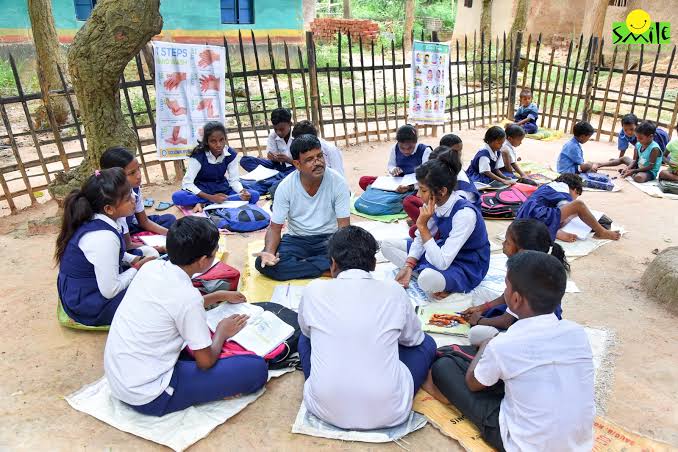

India is home to more than 26 crore school-going children, and a majority of them live in rural areas. Yet when it comes to deciding “what to become in life,” most of these students are left on their own. There is no counsellor to talk to, no exposure to career options beyond a handful of traditional choices, and very little awareness of scholarships, skill programs, or emerging job markets.
This is where career guidance for rural students becomes not just useful, but essential. Proper guidance helps a student choose a stream, a course, or a skill that matches both their interests and the realities of the job market — instead of following a career path by default or by peer pressure. In this article, we look at why career guidance matters so much for rural India, what the latest government data tells us about the scale of the problem, and what practical steps students, parents, teachers, and policymakers can take to close the gap.
10 Proven Ways to Support Education for Underprivileged Kids
Why Career Guidance Matters for Rural Students

Rural India is not short on talent — it is short on direction. A student in a village may be excellent at mathematics or extremely skilled with their hands, but without someone to point them toward relevant courses, competitive exams, or vocational training, that talent often goes unused.
Career guidance helps in four concrete ways:
- Widens the choice set. Most rural students are aware of only a handful of career options — usually teaching, government jobs, farming, or migration for daily-wage work. Guidance introduces them to hundreds of alternative paths, from allied healthcare and renewable energy to digital marketing and skilled trades.
- Improves decision-making. Instead of choosing a stream because “everyone else is doing it,” students learn to match subjects and skills with genuine interest and aptitude.
- Reduces dropouts. When students see a clear, achievable path ahead — a scholarship, an ITI course, a polytechnic seat — they are more likely to stay in school rather than drop out.
- Connects education to employment. Guidance bridges the gap between what is taught in the classroom and what the local and national job market actually needs.
Recent research shows just how wide this awareness gap is: over 93% of Indian students can name ten or fewer career options out of the 250-plus that realistically exist, and roughly 70% of students and young professionals say they feel confused about their career choice at some point. In rural areas, where access to counsellors, internet, and information is far weaker, this confusion is even more pronounced.
The Scale of the Problem: What the Latest Data Shows
To understand why career guidance needs urgent attention, it helps to look at hard numbers from government and independent sources.
1. Very few trained counsellors are available
India has over 26.5 crore school students but only around 10,000 trained career counsellors — a student-to-counsellor ratio of roughly 1:3,000, compared to the globally recommended ratio of 1:250. This shortage is far worse in rural and remote districts, where most government schools have no counselling support at all.
2. Dropout rates remain a concern at the secondary stage
According to UDISE+ 2024–25 data, the dropout rate at the secondary level fell from 13.8% (2022–23) to 8.2% (2024–25) — a genuine improvement, but still meaning that roughly 1 in 12 students leaves school before completing this stage. The ASER 2024 report similarly found that among 15–16-year-olds, nearly 8% are not enrolled in any school, with the figure rising to around 13% in some states such as Uttar Pradesh. Over the last five years, more than 65 lakh children have dropped out nationally, and close to half of them are adolescent girls — a group that especially benefits from structured career and life-skills counselling.
3. Learning outcomes are uneven even where enrolment is high
ASER 2024 also found that while enrolment for the 6–14 age group is strong (above 90%), only about half of Class 5 students in rural India can read a Class 2-level text. This “learning gap” makes career guidance even more important — students need support not just in choosing a career, but in building the foundational skills required to pursue it.
4. Government school enrolment has been shifting
NITI Aayog’s 2026 report, School Education System in India: Temporal Analysis and Policy Roadmap, found that government school enrolment declined from 71% in 2005 to about 49.24% in 2024–25, as more families — including in rural areas — moved toward low-fee private schools in search of better perceived quality. This shift adds pressure on schools of all kinds to offer stronger student support systems, including career guidance.
5. Skill development programs are reaching more rural youth, but gaps remain
Government skilling schemes are trying to fill some of this gap. Under the Jan Shikshan Sansthan (JSS) scheme, for instance, 50.5% of beneficiaries come from rural backgrounds, and participants reported a 73.4% increase in employment and an 89.1% rise in income after training. In FY 2024–25 alone, nearly 20.34 lakh youth were trained under the Pradhan Mantri Kaushal Vikas Yojana (PMKVY) — the highest annual enrolment since 2021. Yet a large share of trainees still drop out before completing certification, showing that awareness and motivation (which career guidance can provide) matter as much as the training itself.
Urban vs Rural: A Quick Comparison
| Indicator | Urban Students | Rural Students |
|---|---|---|
| Access to trained career counsellors | Comparatively higher, often available in private schools | Rare; most government schools have none |
| Awareness of career options | Wider exposure through media, coaching centres, family networks | Often limited to teaching, farming, government jobs, or migration |
| Internet/smartphone access for career research | Generally high | Improving, but still uneven (around 90% of 14–16-year-olds have some smartphone access, per ASER 2024, though ownership is lower) |
| Access to skill development centres | Concentrated in and near cities | Expanding through PMKVY, DDU-GKY, and JSS, but coverage is still patchy |
| Secondary-level dropout risk | Lower | Higher, especially among girls and first-generation learners |
Key Government Initiatives Supporting Rural Career Guidance
Several central schemes are directly relevant to rural students and worth knowing about:
- National Education Policy (NEP) 2020, which recommends career counselling and vocational exposure starting from the middle-school stage, along with multiple entry-exit options in higher education.
- Pradhan Mantri Kaushal Vikas Yojana (PMKVY), offering free short-term skill training with certification, now in its 4.0 phase with courses in areas like AI, robotics, and electric-vehicle servicing.
- Deen Dayal Upadhyaya Grameen Kaushalya Yojana (DDU-GKY), a placement-linked skilling scheme specifically targeted at rural youth from low-income families.
- Jan Shikshan Sansthan (JSS), which has shown strong outcomes for rural and women beneficiaries in particular.
- Skill India Digital Hub (SIDH), an online platform offering free courses, career exploration tools, and apprenticeship listings that rural students can access from a smartphone.
- NITI Aayog’s Aspirational Districts Programme, which has worked to improve education and health access across some of India’s most underserved districts.
These programs show real intent, but their impact depends heavily on whether students in remote villages actually know these schemes exist — which again comes back to the need for active, local career guidance.
Benefits of Career Guidance for Rural Students
- Better stream and subject selection in Classes 9–12, based on aptitude rather than guesswork.
- Higher retention in school, since students with a clear goal are less likely to drop out.
- Access to scholarships and financial aid that many rural families are simply unaware of.
- Exposure to vocational and skill-based careers, not just the traditional “doctor, engineer, or government job” options.
- Reduced migration distress, as students can identify local or regional opportunities instead of moving to cities without a plan.
- Greater confidence for first-generation learners, who often lack family experience of navigating higher education or the job market.
- Support for girls’ education, since career guidance combined with life-skills counselling has been linked to lower dropout and delayed early marriage in several studies.

Practical Tips for Students, Parents, and Teachers
For students:
- Use free digital tools like the Skill India Digital Hub to explore career options and short courses.
- Talk to teachers, local ITI staff, or NGO field workers — they often know more about local opportunities than students realise.
- Don’t limit your choices to what your immediate family or neighbours have done; ask about newer sectors like renewable energy, healthcare support, and digital services.
- Track application dates for scholarships, entrance exams, and skilling programs — many rural students miss opportunities simply due to late information.
For parents:
- Attend school parent-teacher meetings where career or skilling information is shared.
- Encourage daughters to continue schooling past Class 10 — data consistently shows dropout risk rises sharply for girls at this stage.
- Ask about government skilling schemes (PMKVY, DDU-GKY, JSS) before assuming migration for unskilled work is the only option.
For teachers and schools:
- Dedicate even one period a week to career awareness, using free NCERT or Skill India resources.
- Invite local ITI, polytechnic, or NSDC representatives for periodic career talks.
- Track and follow up with students at high risk of dropping out, especially around Class 9–10.
For policymakers and NGOs:
- Prioritise recruiting or training para-counsellors in block-level schools, since the current 1:3,000 counsellor ratio is far below the recommended 1:250.
- Expand mobile or digital career guidance units that can reach schools without a resident counsellor.
- Link skilling program outreach directly to school career-guidance sessions to reduce the current gap between enrolment and completion.
Frequently Asked Questions (FAQs)
1. Why is career guidance especially important for rural students?
Because rural students typically have far less exposure to career options, fewer trained counsellors, and less access to information on scholarships or skilling schemes than their urban counterparts — making structured guidance more impactful per student.
2. What is the current counsellor-to-student ratio in India?
Roughly 1 trained counsellor for every 3,000 students nationally, against a globally recommended ratio of 1:250 — a gap that is generally wider in rural districts.
3. Which government schemes help rural students with careers and skills?
Key schemes include PMKVY, DDU-GKY, Jan Shikshan Sansthan (JSS), the Skill India Digital Hub, and provisions under NEP 2020 for career counselling and vocational exposure from the middle-school stage.
4. Does career guidance help reduce school dropout rates?
Evidence suggests it can. Secondary-level dropout has already declined from 13.8% to 8.2% between 2022–23 and 2024–25 per UDISE+ data, and programs combining guidance with skilling (like JSS) show strong employment and income gains for rural participants.
5. How can a rural student access career guidance without a local counsellor?
Free digital platforms such as the Skill India Digital Hub, government helplines, NGO outreach programs, and school-level career talks organised with ITIs or NSDC partners are practical starting points even without a resident counsellor.
6. Is career guidance only about choosing a college course?
No. It also covers vocational training, skilling programs, entrepreneurship, competitive exam preparation, and even life-skills support — all of which are relevant to rural students who may not be pursuing a traditional degree path.
Conclusion
The importance of career guidance for rural students goes well beyond helping one child pick a subject or a college. At scale, it directly affects school retention, employability, and how effectively India’s rural youth population can contribute to the country’s economic growth. The data is clear: dropout rates are falling but remain significant, counsellor availability is far below what is needed, and government skilling schemes — while expanding — are not yet reaching every village.
Closing this gap will require coordinated effort: schools introducing regular career-awareness sessions, government schemes reaching the last-mile student, and families and communities recognising that a well-guided student is far more likely to stay in school and build a stable future. Career guidance is not a luxury for rural India — it is a foundational piece of the country’s education and employment strategy.