
Vaccination Awareness: Myths, Facts, Benefits (2026 Guide)
Every year, immunization prevents an estimated 3.5 to 5 million deaths worldwide from diseases like diphtheria, tetanus, pertussis, influenza, and measles, making it one of the most effective public health tools ever developed. Yet vaccine hesitancy — fuelled largely by myths circulating on social media — continues to leave millions of children under-protected.
According to the latest WHO and UNICEF joint estimates released in July 2025, 14.3 million infants received zero vaccine doses in 2024, and nearly 20 million missed at least one dose of the diphtheria-tetanus-pertussis (DTP) vaccine. Misinformation is repeatedly flagged by both organizations as one of the key barriers standing between children and life-saving protection.
This article breaks down the most common vaccination myths, matches them against verified facts from WHO, UNICEF, and Government of India sources, and gives parents and caregivers a practical, judgment-free guide to making informed decisions. top 10 healthcare-focused NGOs in India
1. Why Vaccination Awareness Matters
Vaccination is not just an individual health choice — it is a collective shield. When enough people in a community are vaccinated, diseases struggle to spread even to those who cannot be vaccinated, such as newborns, cancer patients, or people with weakened immune systems. This protective effect is called herd immunity.
The problem is that vaccines are victims of their own success. Diseases like polio and diphtheria have become so rare in many countries that people forget how devastating they once were. This “out of sight, out of mind” effect, combined with viral misinformation, has allowed vaccine hesitancy to grow even in places with excellent healthcare access.
Real-world consequence: WHO and UNICEF data shows that of the 195 countries tracked since 2019, 22 countries that had already achieved 90% DTP coverage have since seen it decline — proof that immunity gained through vaccination can be lost when awareness and coverage drop.
2. How Vaccines Work (With Diagram)
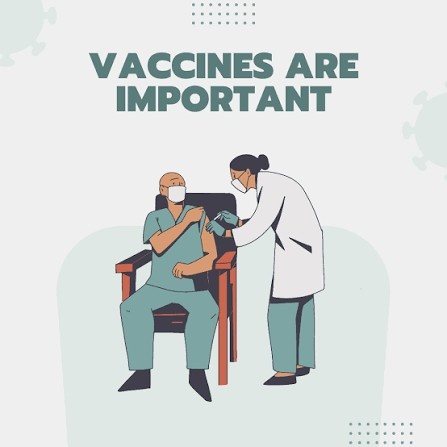
A vaccine trains your immune system to recognize and fight a specific germ — without you having to get sick first.
| Vaccine Type | How It Works | Examples |
|---|---|---|
| Live-attenuated | Weakened version of the live germ | Measles-Rubella (MR), BCG |
| Inactivated | Killed version of the germ | Inactivated Polio Vaccine (IPV) |
| Toxoid | Neutralized toxin produced by bacteria | Tetanus, Diphtheria |
| Subunit/Conjugate | Only a piece of the germ (protein/sugar) | Hepatitis B, Pneumococcal (PCV), Hib |
| mRNA | Instructions for cells to build a harmless piece of the germ | COVID-19 (select vaccines) |
3. Vaccination Myths vs Facts (Detailed Comparison)
Quick Reference Table
| # | Myth | Fact |
|---|---|---|
| 1 | Vaccines cause autism | No credible scientific study has ever found a link between vaccines and autism; the original 1998 study making this claim was retracted for fraud. |
| 2 | Natural immunity is always better than vaccine immunity | Natural infection often carries serious risks (paralysis, brain damage, death) that vaccines avoid while still building protection. |
| 3 | Vaccines overload a baby’s immune system | Infants’ immune systems handle thousands of germs daily; the antigens in the full childhood schedule are a tiny fraction of that natural exposure. |
| 4 | If a disease is rare, the vaccine isn’t needed anymore | Diseases stay rare because vaccination continues; coverage drops have repeatedly triggered outbreaks (e.g., measles resurgence in under-vaccinated regions). |
| 5 | Vaccines contain harmful levels of toxic ingredients | Ingredients like formaldehyde or aluminum salts are present in tiny, well-studied amounts, far below levels that cause harm. |
| 6 | Multiple vaccines in one visit are unsafe | Combination and same-day vaccines are rigorously tested together and do not increase health risks. |
| 7 | Only unhygienic or poor communities need vaccines | Vaccine-preventable diseases spread regardless of income level; unvaccinated individuals anywhere remain vulnerable. |
| 8 | Breastfeeding alone provides enough protection | Breastfeeding supports immunity, but it does not replace protection against diseases like polio, measles, or whooping cough. |
| 9 | Vaccines are a business conspiracy with no real benefit | Immunization programs are run by public health bodies (WHO, UNICEF, national governments) and independently audited; vaccines have documented, measurable disease-reduction outcomes. |
| 10 | Getting vaccinated means you’ll never get sick at all | Vaccines greatly reduce the risk and severity of disease; no vaccine offers 100% protection, which is why herd immunity from high coverage still matters. |
| 11 | Side effects mean the vaccine is dangerous | Mild reactions (soreness, low fever) show the immune system is responding as expected; serious adverse events are rare and closely monitored. |
| 12 | Adults don’t need vaccines | Immunity from childhood vaccines can wane; boosters (tetanus, influenza, HPV catch-up, etc.) remain important throughout adulthood. |
Deep Dive: The Five Most Damaging Myths
Myth: Vaccines cause autism. This claim traces back to a single 1998 paper published in The Lancet, which was later retracted after investigations found data manipulation and undisclosed financial conflicts of interest. Since then, large-scale studies involving millions of children across multiple countries have found no connection between vaccination and autism spectrum disorder. Autism diagnoses have risen partly due to broader diagnostic criteria and better screening — not vaccine schedules.
Myth: Natural infection is safer than vaccination. Contracting measles naturally carries roughly a 1-in-1,000 risk of fatal encephalitis, while the vaccine carries no such risk. The same pattern holds for polio (paralysis), rubella (birth defects if contracted during pregnancy), and tetanus (often fatal without treatment). Vaccines deliver the immune benefit without the disease’s real dangers.
Myth: The immune system gets “overloaded” by vaccines. A baby’s immune system responds to countless bacteria and viruses from the moment of birth — through skin contact, food, and the environment. Studies estimate a child could theoretically respond to thousands of vaccines simultaneously without issue; the actual childhood schedule uses a small, carefully sequenced fraction of that capacity.
Myth: Vaccine ingredients are toxic. Words like “formaldehyde” or “aluminum” sound alarming out of context, but dose determines toxicity. The human body produces more formaldehyde naturally through normal metabolism than exists in any vaccine dose. Regulatory bodies test ingredient safety extensively before approval.
Myth: Rare diseases don’t need vaccines anymore. This is the most consequential myth today. When vaccination coverage drops even slightly, previously controlled diseases can return quickly. WHO and UNICEF have documented measles outbreaks re-emerging in multiple countries following coverage declines — a direct, measurable consequence of this specific myth taking hold.
4. Vaccine-Preventable Diseases at a Glance
| Disease | Risk Without Vaccination | Vaccine Available Since |
|---|---|---|
| Polio | Permanent paralysis | 1955 (IPV), 1961 (OPV) |
| Measles | Pneumonia, brain swelling, death | 1963 |
| Diphtheria | Airway blockage, heart damage | 1920s |
| Whooping Cough (Pertussis) | Severe coughing fits, especially fatal in infants | 1940s |
| Tetanus | Muscle rigidity, often fatal | 1924 |
| Hepatitis B | Chronic liver disease, liver cancer | 1981 |
| Rubella | Severe birth defects if contracted in pregnancy | 1969 |
| HPV | Cervical and other cancers | 2006 |
5. Global and India Immunization Data (2024–2025)
Global Snapshot (WHO/UNICEF WUENIC, released July 2025)
| Indicator | 2024 Global Figure |
|---|---|
| Infants receiving at least 1 DTP dose | 89% (~115 million) |
| Infants completing 3-dose DTP series | 85% (~109 million) |
| Zero-dose children (no vaccines at all) | 14.3 million |
| Children under/unvaccinated (missed ≥1 DTP dose) | Nearly 20 million |
| Measles first-dose coverage (MCV1) | 84% |
| Measles second-dose coverage (MCV2) | 76% |
| HPV vaccine coverage (adolescent girls, 1st dose) | 31% (up from 17% in 2019) |
| Hepatitis B (3-dose) coverage | 84% |
Over half of all zero-dose children globally are concentrated in just nine countries: Nigeria, India, Sudan, the Democratic Republic of Congo, Ethiopia, Indonesia, Yemen, Afghanistan, and Angola — though high-population countries can appear on this list even when their overall coverage rate is relatively strong.
| Indicator | Data Point |
|---|---|
| Full Immunization Coverage — NFHS-4 (2015–16) | 62% |
| Full Immunization Coverage — NFHS-5 (2019–21) | 76.4% |
| Universal Immunization Programme (UIP) reach | ~2.6 crore children and 3 crore pregnant women annually |
| Diseases covered under UIP | 12 vaccine-preventable diseases |
| Mission Indradhanush launch year | 2015 |
India’s Universal Immunization Programme (UIP), strengthened through Mission Indradhanush and its intensified phases, is one of the largest public immunization efforts in the world by sheer volume of beneficiaries. Independent household surveys (NFHS) show a genuine, sustained rise in full immunization coverage over the past decade, even though survey-based figures tend to run lower than administrative program data due to differences in measurement methodology.
6. Common Questions Parents Ask
“My child seems perfectly healthy — why vaccinate now?” Vaccination works best as prevention, before exposure to disease. Waiting until a child is exposed removes the protective window entirely.
“Isn’t it better to space out vaccines rather than follow the full schedule?” Delaying vaccines leaves children unprotected for longer without any proven safety benefit. National immunization schedules are timed to protect children during the exact ages when they are most vulnerable to specific diseases.
“Can vaccines interact badly with each other?” Combination vaccines and same-visit schedules are tested extensively before approval specifically for this concern, and they do not weaken the immune response to any individual vaccine.
“What if my child has a mild cold — should we skip the vaccine?” Minor illnesses like a common cold usually do not require postponing vaccination. A healthcare provider can advise on the very few situations (such as high fever or specific medical conditions) where a short delay is appropriate.

7. Practical Tips for Parents and Caregivers
- Keep a vaccination card or digital record — Track every dose and due date; ask your health worker or pediatrician for a physical or digital copy.
- Verify claims before sharing them — If a vaccine claim is circulating on social media, cross-check it against WHO, UNICEF, or your national health ministry’s website before believing or forwarding it.
- Ask questions directly to healthcare providers — A five-minute conversation with a doctor or ASHA/ANM worker can resolve most doubts more reliably than an online forum.
- Don’t skip booster doses — Many vaccines need follow-up doses to build full, lasting protection; a single dose is often not enough.
- Watch for genuine emergencies, not normal reactions — Mild fever or soreness at the injection site is expected; seek medical attention only for severe reactions like difficulty breathing or persistent high fever.
- Get vaccinated during pregnancy where recommended — Tetanus and certain other vaccines during pregnancy protect both mother and newborn.
- Remember adults need vaccines too — Don’t assume immunization ends in childhood; boosters and travel vaccines matter at every life stage.
8. Government Programs Supporting Immunization in India

| Program | Focus | Key Achievement |
|---|---|---|
| Universal Immunization Programme (UIP) | Free vaccination against 12 diseases for children and pregnant women | One of the largest immunization programs globally by volume |
| Mission Indradhanush (2015) | Accelerating full immunization coverage in low-coverage districts | Helped raise FIC from 62% (NFHS-4) to 76.4% (NFHS-5) |
| Intensified Mission Indradhanush (IMI 4.0) | Reaching left-out and dropout children through focused district rounds | Expanded to 416 districts across 33 states/UTs |
| U-WIN Digital Platform | Real-time tracking of beneficiaries and digital vaccination certificates | Piloted in 2023 for improved data accuracy |
Globally, Gavi, the Vaccine Alliance, continues to support immunization in 57 low-income countries, and its 2026–2030 strategic cycle aims to close remaining funding and access gaps for the world’s most under-vaccinated children.
Frequently Asked Questions (FAQs)
Q1. Are vaccines completely free of side effects?
No vaccine is entirely free of side effects, but most are mild and temporary, such as soreness or low-grade fever. Serious adverse events are rare and are continuously monitored by health authorities.
Q2. Do vaccines really eliminate diseases, or just reduce symptoms?
Vaccines prevent infection or significantly reduce its severity. Diseases like smallpox have been fully eradicated through vaccination, and polio is close to elimination in most regions.
Q3. Is it safe to vaccinate a premature or low-birth-weight baby?
In most cases, yes — vaccination schedules for such infants are typically based on chronological age, not adjusted birth age, but a pediatrician’s guidance should always be followed for individual cases.
Q4. Why do some vaccinated people still get the disease?
No vaccine offers 100% protection for every individual, but vaccinated people who do get infected typically experience much milder illness. This is why herd immunity — protecting the wider community — remains important.
Q5. Where can I check verified vaccination information in India?
The Ministry of Health and Family Welfare’s National Health Mission portal, WHO India, and UNICEF India websites provide verified, regularly updated immunization information.
Conclusion
Vaccination awareness is one of the most effective ways to protect individuals, families, and communities from preventable diseases. Despite the spread of misinformation, scientific evidence consistently shows that vaccines are among the safest and most thoroughly tested medical interventions available.
Understanding the difference between vaccination myths and facts helps parents and caregivers make informed decisions based on trusted medical guidance rather than fear or misinformation. By following the recommended immunization schedule, consulting qualified healthcare professionals, and relying on credible sources such as the World Health Organization (WHO), UNICEF, and national health authorities, people can reduce the risk of serious illnesses and contribute to healthier communities.
Staying informed about vaccine safety and the importance of immunization is not just a personal responsibility—it is a long-term investment in public health and future generations.