

Economists, educators, and development practitioners have debated for decades whether education truly breaks the cycle of poverty — or simply reproduces inequality in a more educated form. The evidence is now clear enough to settle the debate.
Breaking the poverty cycle through education works. But it only works under specific conditions, in specific formats, with specific supporting interventions. This post lays out what the research actually says — without the oversimplification that donors and policymakers often receive.
Quick Insight: Nobel laureate Esther Duflo’s research shows that one additional year of primary school increases earnings by 8% for girls in developing countries — more than almost any other intervention studied.
Table of Contents
1. Why the 'Education = Opportunity' Narrative Is Both True and Incomplete
The popular narrative — education lifts people out of poverty — is true at the population level and across decades. But it obscures important nuances that determine whether any individual child benefits from schooling.
Education breaks the poverty cycle when: quality is sufficient to produce real skill gains, labour markets reward those skills, social barriers (discrimination, nepotism) do not block access to those markets, and supporting conditions (nutrition, safety, stability) allow children to actually learn.
Remove any one of these conditions, and the promise of education as a poverty solution erodes significantly.
2. 8 Research-Backed Findings on Education and Poverty
Finding 1: Early Childhood Education Has the Highest ROI
James Heckman’s landmark research shows that investment in early childhood education for low-income children returns 7-13% annually in long-term economic benefit — the highest return of any social investment studied. The window of maximum neurological development closes by age 5, making early intervention disproportionately powerful.
Finding 2: Girls' Education Has the Broadest Multiplier Effect
Every additional year of secondary schooling for a girl in a developing country: reduces her likelihood of child marriage by 5-10%, reduces under-5 mortality for her future children by 8%, and increases her income by 10-20%. Educating girls is the highest-leverage poverty intervention available.
Finding 3: Teacher Quality Outweighs School Infrastructure
OECD research consistently shows that the quality of teaching has 3-4x more impact on student outcomes than physical school infrastructure. A great teacher in a broken building outperforms a mediocre teacher in a modern facility. Investment in teacher training is more effective per dollar than investment in construction.
Finding 4: Attendance Does Not Equal Learning
The World Bank’s ‘learning poverty’ research found that 53% of children in low- and middle-income countries cannot read and understand a simple text by age 10 — even after years of school enrollment. Attendance without quality teaching produces literate-looking statistics with illiterate realities.
Finding 5: Conditional Cash Transfers Improve Both Attendance and Nutrition
Mexico’s PROGRESA programme — the world’s most studied conditional cash transfer — showed that paying poor families to keep children in school increased secondary enrollment by 8% and reduced child labour by 14%. The financial incentive removed the economic tradeoff that keeps poor children out of classrooms.
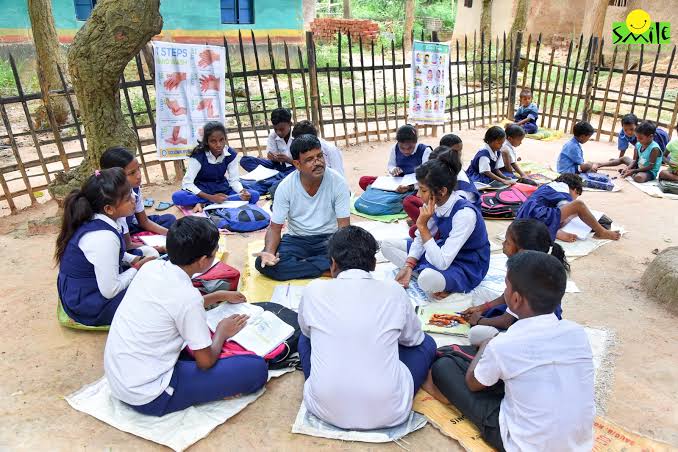
Finding 6: Community-Based Learning Outperforms Centralised Models in Remote Areas
A comparative study of education models in rural India found that community learning centres produced 34% better literacy outcomes than government schools serving the same population — primarily because proximity eliminated the attendance barrier.
Finding 7: Parent Literacy Amplifies Children's Outcomes
Children of literate mothers are 50% more likely to live past age 5 and significantly more likely to complete primary school. Intergenerational literacy programmes — targeting parents alongside children — produce compounding benefits that single-generation interventions cannot match.
Finding 8: Peer Effects Are Powerful — And Bidirectional
Research from randomised classroom studies shows that mixing low- and high-performing students in well-designed inclusive classrooms improves outcomes for both groups. Segregating poor or struggling learners into separate, underfunded tracks consistently produces worse outcomes.
Reflective Question: If research so clearly identifies what works in breaking the poverty cycle through education, why do most education programmes still not implement these findings? Who benefits from the status quo?
3. Where Education Alone Is Not Enough
Breaking the poverty cycle through education has clear limits when it operates in isolation.
- Education cannot break poverty if graduates enter a labour market with no formal jobs
- Education cannot break poverty if discrimination prevents qualified candidates from accessing opportunity
- Education cannot break poverty if children are too malnourished, traumatised, or unstable to learn effectively
- Education cannot break poverty at scale if teacher quality remains low and curriculum remains irrelevant
These limitations are not arguments against education. They are arguments for complementary interventions that address the full ecosystem of poverty.
4. The Complementary Interventions That Amplify Impact
School Feeding and Nutrition
Programmes combining quality education with nutritional support consistently outperform education-only interventions by 20-30% on attendance and learning outcome metrics.
Vocational Linkages
Education that connects to real employment opportunities — through industry partnerships, apprenticeships, or skill-based certification — produces measurably better poverty reduction outcomes than purely academic programmes.
Social Protection
Education that connects to real employment opportunities — through industry partnerships, apprenticeships, or skill-based certification — produces measurably better poverty reduction outcomes than purely academic programmes.
5. A Case Study: Education Plus Economic Support in Rural Bihar
A district in Bihar — among India’s poorest — had a primary school enrollment rate of 78% but a Class 8 completion rate of just 31%. The dropout gap occurred almost entirely between Classes 5 and 8, corresponding to the period when adolescent children become economically useful to families.
Challenge
Keeping children in school through the economically critical middle-school years required making education financially competitive with the value of a child’s labour.
Actions Taken
An integrated programme provided: monthly stipends for Class 6-8 attendance, quality remedial support for children behind grade level, vocational awareness sessions about careers accessible through education, and family savings matching programmes to reduce economic pressure on child labour.
Outcome
Class 8 completion rates in target schools rose from 31% to 64% over three years. Critically, learning outcomes also improved — children completing Class 8 in the programme scored 22% higher on standardised literacy and numeracy assessments than comparison groups.
Lesson
Breaking the poverty cycle through education requires addressing the economic logic of poverty directly, not simply providing schooling and hoping families will prioritise it.
6. How NGOs Are Translating Research Into Action
The gap between research findings and programme design is one of the persistent failures of the development sector. Effective NGOs — like Unessa Foundation — bridge this gap by designing programmes around evidence rather than convention.
- Curriculum designed around learning outcomes, not content coverage
- Teacher incentives tied to student progress, not attendance
- Complementary nutrition, stipend, and family engagement components built into every programme
- Regular third-party evaluation to catch and correct what is not working
7. FAQ — People Also Ask
Can education really break the cycle of poverty?
Yes — under specific conditions. Quality education, combined with complementary interventions addressing nutrition, economic incentives, and teacher quality, consistently produces poverty-reducing outcomes across multiple research contexts.
What does research show about education and poverty?
Research shows early childhood education has the highest ROI, girls’ education has the broadest multiplier effect, teacher quality matters more than infrastructure, and attendance without learning quality produces minimal poverty reduction.
Why does poverty make it harder to break the cycle?
Because poverty creates multiple simultaneous barriers — hunger, stress, instability, economic pressure — that impair both access to education and the ability to benefit from it.
What is intergenerational poverty and how does education address it?
Intergenerational poverty is the transmission of economic disadvantage from parent to child. Education breaks this transmission by increasing children’s earnings, improving their health literacy, and raising their expectations for their own children’s futures.
8. Conclusion
The relationship between poverty and education is one of the clearest causal chains in social science. Poverty limits education. Limited education deepens poverty. And the cycle continues — unless deliberately interrupted.
We have the evidence. We have the models. We have the organisations — like Unessa Foundation — doing this work at ground level. What remains is the collective decision to prioritise this over less urgent, more glamorous interventions.
A child’s intelligence is not determined by their income. Their access to education should not be either.