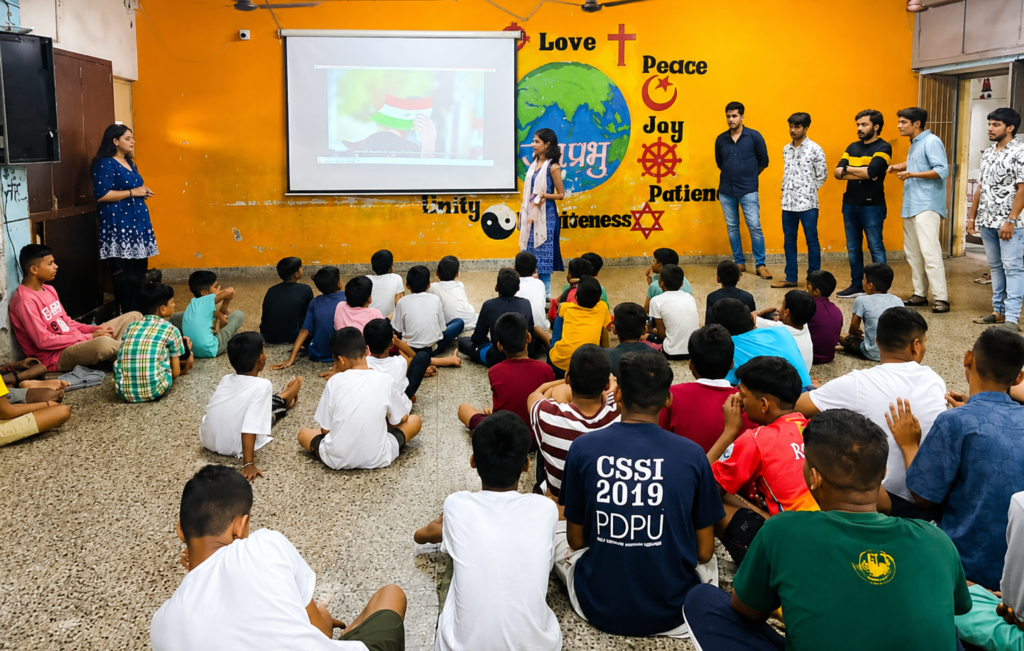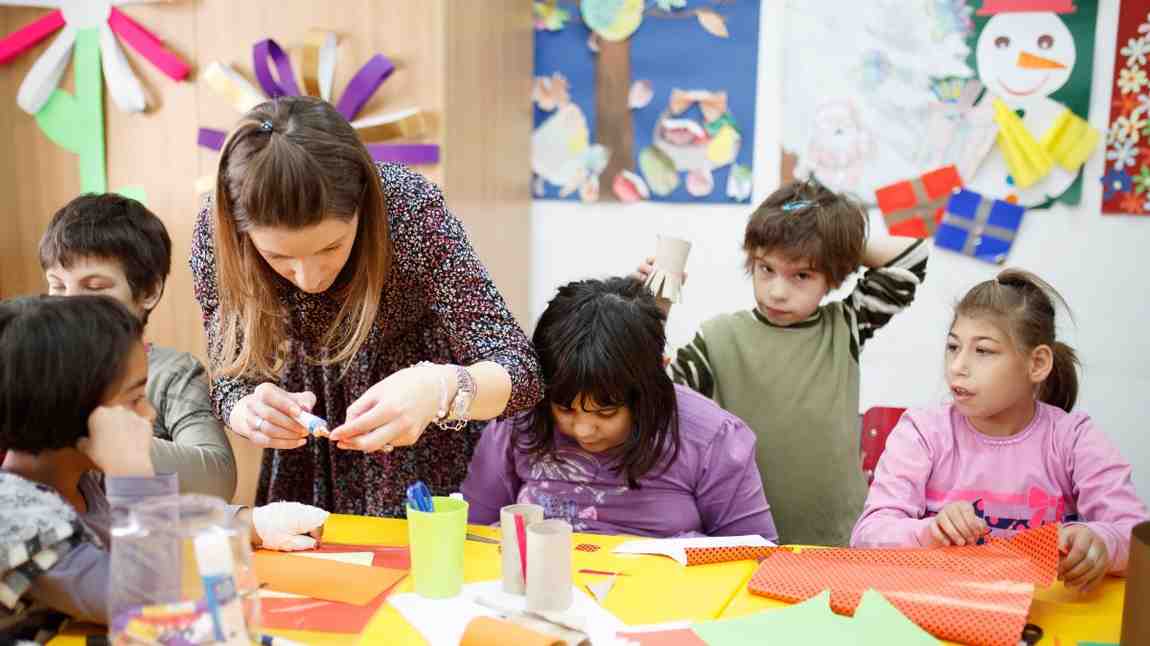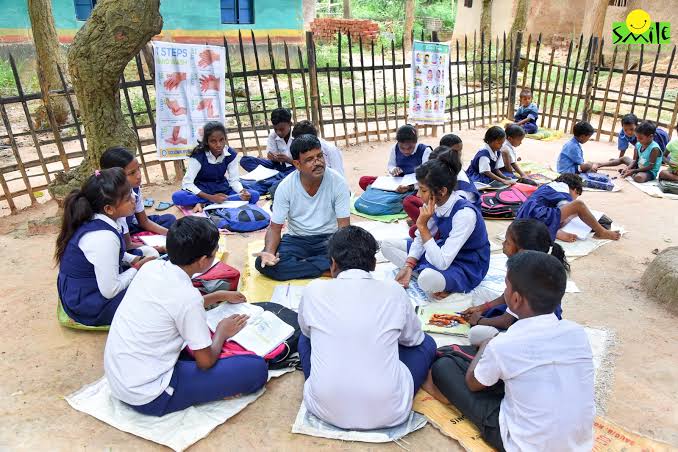



Volunteer teaching is one of the most common ways professionals attempt to contribute to child education. It is also one of the most misunderstood — often romanticised in ways that lead to poor preparation, mismatched expectations, and outcomes that help the volunteer more than the children.
This guide is honest about the realities of volunteer teaching with underprivileged children — what it demands, what it delivers, where it works, and where it does not. If you are considering this path, read this before you commit.
Quick Insight: Research from the International Volunteer Impact Research Consortium shows that volunteers who prepare for 3+ weeks and commit for 6+ months produce 4x the learning impact of volunteers who arrive with short preparation and short commitments.
1. The Honest Truth About Volunteer Teaching Underprivileged Children
Volunteering with underprivileged children is not a one-way transaction where a skilled outsider saves a community. At its best, it is a structured exchange where a volunteer contributes specific skills, learns from community realities, and leaves behind systems and capacity that outlast their presence.
At its worst, it displaces local teachers, creates emotional dependency in children who lose attachment figures when volunteers leave, and serves primarily the volunteer’s personal development rather than the children’s educational progress.
The distinction between helpful and harmful volunteering is determined almost entirely by preparation, commitment length, skills match, and programme structure. None of these are accidental.
2. What to Expect: The Reality vs. The Romanticisation
What You Will Find
- Children who are often behind their formal grade level — sometimes significantly
- Classroom environments that are resource-constrained and physically challenging
- Language barriers that require either prior preparation or a co-teacher
- Children who have experienced trauma, instability, or malnutrition — and whose behaviour reflects this
- Communities that have seen volunteers come and go — and may initially be cautious about your commitment
What You Will Not Find
- Immediate, visible transformation — learning is slow, incremental, and non-linear
- The narrative arc of the inspiration movie — real impact is unglamorous
- A community waiting to be saved — most communities are resilient, resourceful, and critical of outsiders who underestimate them
What You Will Gain
- Pedagogical skills you cannot learn in a classroom setting
- Cultural competency and perspective that most professional environments do not provide
- Relationships with children and community members that are genuinely meaningful
- A clearer, more evidence-based understanding of poverty and education
Reflective Question: Are you drawn to volunteer teaching because it serves the children — or because it serves your personal development? Both can be true, but the honest answer shapes how you should prepare.7
3. When Volunteer Teaching Underprivileged Children Genuinely Helps
Volunteer teaching with underprivileged children produces genuine educational benefit under specific conditions:
Skill Match
Volunteers with prior teaching experience, subject matter expertise, or specific skills (technology, art, music, sport) that the programme cannot otherwise provide produce measurably better outcomes than general volunteers.
Duration
Research consistently shows that a minimum 6-month commitment is necessary to build the trust and relationship depth required for meaningful educational impact. Short stints — anything under 4 weeks — produce minimal educational benefit and potential emotional harm through attachment disruption.
Structured Programme
Volunteers placed in structured programmes — with training, supervision, curriculum support, and clear learning objectives — produce significantly better outcomes than volunteers who design their own content ad hoc.
Language Preparation
Volunteers who invest in basic local language acquisition before arrival engage more effectively with children, build rapport faster, and demonstrate respect for community culture that directly improves their effectiveness.
4. How to Prepare for Volunteer Teaching
6-8 Weeks Before Starting
- Research the specific community context, language, and educational challenges
- Review foundational literacy and numeracy teaching methodologies
- Complete a child safeguarding training (many free online courses are available)
- Learn 50-100 basic phrases in the local language
2-4 Weeks Before Starting
- Review the programme’s curriculum framework and learning objectives
- Prepare 4-6 weeks of lesson plans aligned with programme standards
- Understand the community’s cultural norms around gender, authority, and education
First Two Weeks On-Site
- Observe before teaching — understand the classroom dynamics, children’s levels, and existing teacher methods
- Shadow the lead teacher rather than immediately taking over
- Build relationships with children through non-instructional activities before formal teaching
5. How to Choose the Right Programme
Not all volunteer teaching programmes are equally structured or ethical. Evaluate potential programmes against these criteria:
- Minimum commitment length of 6 months — any programme accepting 2-week volunteers is likely prioritising volunteer fees over child welfare
- Pre-departure training and on-site orientation
- Supervision by qualified education staff throughout the placement
- Clear curriculum framework — not ‘teach whatever you want’
- Published child safeguarding policy with volunteer-specific protocols
- Community-led rather than volunteer-led programme design
Pro Tip: Ask the programme how they measure the educational impact of their volunteers. A programme that cannot answer this question is not prioritising learning outcomes.
6. A Case Study: Six Months in a Community Learning Centre
Background
A 28-year-old software engineer from Hyderabad took a 6-month career break to volunteer with a community learning centre in Chhattisgarh. His teaching experience was limited to occasional tutoring. He spoke no Hindi.
Challenge
He arrived expecting to teach coding and technology skills. The programme coordinator redirected him — the children first needed foundational literacy and numeracy, neither of which he was trained to teach.
Actions Taken
He spent the first month observing and assisting the lead teacher. He completed an online course in foundational literacy methodology. He began incorporating simple technology — primarily visual learning games on a shared tablet — as a supplement to the lead teacher’s literacy instruction. He learned basic Chhattisgarhi phrases within the first three weeks.
Outcome
Over 6 months, the 12 children in his supported cohort showed 18% greater learning gains than the comparison cohort — attributed primarily to the additional supervised practice time his presence enabled. He returned to his software career with a measurably changed perspective on human-centred design and a long-term monthly sponsorship relationship with two children in the programme.
Lesson
Volunteer teaching with underprivileged children works best when the volunteer subordinates their own agenda to the programme’s needs — and when the programme is rigorous enough to channel volunteer energy productively.
👉Click here to volunteer in our team as Teacher: Join as our team
7. FAQ — People Also Ask
What do I need to volunteer teach underprivileged children?
Subject knowledge or teaching experience, a minimum 6-month commitment, completion of child safeguarding training, basic local language preparation, and selection of a structured programme with supervision and curriculum support.
How long should I volunteer to make a real difference?
A minimum of 6 months. Research shows that short-term volunteering (under 4 weeks) produces minimal educational benefit and potential emotional harm through attachment disruption.
Do I need a teaching qualification to volunteer?
Not necessarily, but prior teaching experience or subject matter expertise significantly improves impact. All volunteers should complete child safeguarding training regardless of background.
How do I find a credible volunteer teaching programme?
Look for programmes requiring 6+ month commitments, offering structured training and supervision, publishing their educational impact data, and operating with a community-led rather than volunteer-led programme design.
8. Conclusion
Volunteer teaching underprivileged children is one of the most meaningful professional development experiences available — and one of the most easily done badly. The difference is preparation, commitment, humility, and programme quality.
If you approach volunteering as a learning experience in service of the children — rather than a service experience in service of your resume — and if you choose a programme rigorous enough to channel that intention productively, the impact is real and lasting.
For both you and the child.