
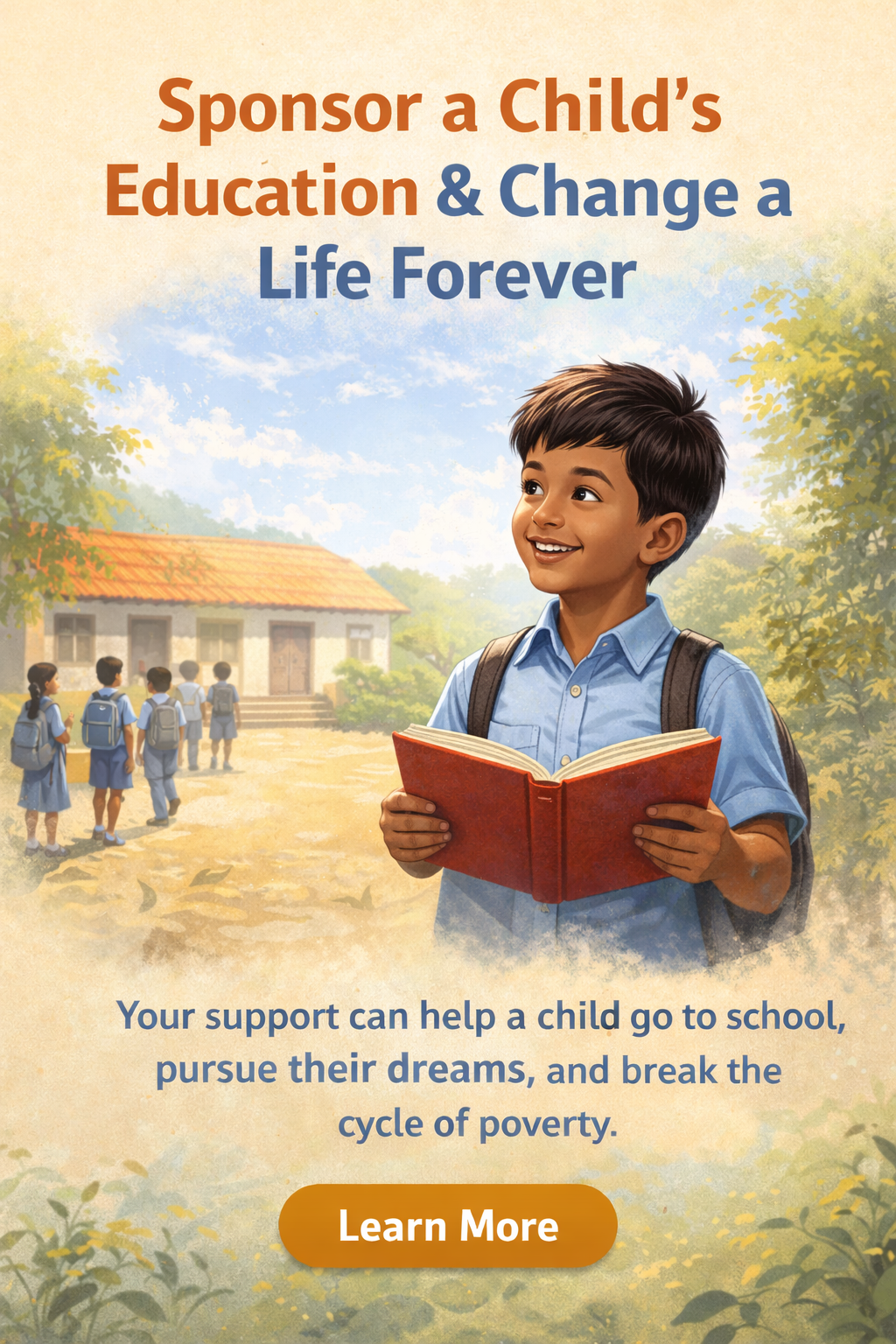

“When you sponsor a child’s education, you create long-term change.” Education is one of the most powerful forces for change in the world. Yet, millions of children are still denied access to basic education due to poverty, lack of resources, and social barriers. Sponsoring a child’s education is one of the most impactful ways to make a difference. It is not just about financial support—it is about giving a child hope, dignity, and the opportunity to build a better future.
When you sponsor a child’s education, you are not just donating—you are building a future. If you’ve ever wondered how you can truly change someone’s life, sponsoring a child’s education is a meaningful and life-changing step. This guide explains everything you need to know about child sponsorship and how your support can create lasting impact. You can also read education for all in India understand broader educational initiatives.
What Does It Mean to Sponsor a Child’s Education Program?
Sponsoring a child’s education means providing financial support to cover the essential costs required for a child to attend school. These costs typically include:
- School fees
- Books and Stationery
- Uniforms
- Meals
- Healthcare support
In many cases, sponsorship programs are managed by NGOs or educational foundations that ensure the funds are used effectively.
Key idea:
You are not just paying for schooling—you are investing in a child’s future.
Why Sponsor a Child’s Education Matters
Millions of children drop out of school every year due to financial constraints
Without education, they often face:
- Child labor
- Early marriage
- Low-paying jobs
- Limited opportunities
Sponsorship changes this trajectory completely.
Impact of sponsorship:
- Keeps children in school
- Improves academic performance
- Boosts confidence and self-esteem
- Provides long-term career opportunities
A single sponsorship can break the cycle of poverty for an entire family.
How Sponsor a Child’s Education Changes Lives
1. Provides Access to Quality Education
Many underprivileged children do not attend school simply because they cannot afford it. Sponsorship ensures they receive:
- Regular schooling
- Proper learning materials
- Guidance from teachers
This foundation is essential for lifelong success.
2. Reduces Financial Burden on Families
Poor families often struggle to meet daily needs. Education becomes a luxury they cannot afford.
When you sponsor a child:
- Families are relieved of educational expenses
- Children are less likely to drop out
- Parents are encouraged to prioritize education
3. Prevents Child Labor
In many communities, children are forced to work to support their families. Sponsorship provides an alternative path.
Instead of working long hours, children can:
- Attend school
- Focus on learning
- Build a better future
4. Encourages Emotional and Social Development
Education is not just academic—it also shapes personality and social skills.
Sponsored children gain:
- Confidence
- Communication skills
- Social awareness
They learn to interact, express themselves, and dream bigger.
5. Opens Doors to Career Opportunities
Education equips children with the skills needed for better jobs. Sponsored children can pursue careers in:
- Technology
- Medicine
- Business
- Education
This leads to financial independence and a higher quality of life.
How to Sponsor a Child’s Education Easily
If you’re ready to make a difference, here’s how you can start:
1. Choose a Trusted Organization
Look for reputable NGOs or foundations that offer child sponsorship programs.
What to check:
- Transparency in fund usage
- Regular updates on the child’s progress
- Verified impact reports
2. Select a Sponsorship Plan
Most organizations offer flexible plans such as:
- Monthly sponsorship
- Annual sponsorship
- One-time contributions
Choose a plan that fits your budget.
3. Understand What Your Contribution Covers
Before sponsoring, understand what your funds will support:
- Tuition fees
- Study materials
- Nutrition programs
- Healthcare
This ensures clarity and trust.
4. Build a Connection with the Child
Many programs allow sponsors to:
- Exchange letters
- Receive progress reports
- Celebrate milestones
This personal connection makes the experience more meaningful.
5. Stay Consistent
Consistency is key. Education is a long-term process, and regular support ensures the child can complete their studies without interruption.
How Much Does It Cost to Sponsor a Child?
The cost of sponsoring a child varies depending on the region and organization. On average:
- Monthly sponsorship can range from ₹500 to ₹3000
- Annual sponsorship may range from ₹6000 to ₹36,000
Even a small contribution can make a significant difference when combined with others.
Benefits When You Sponsor a Child’s Education
For the Child:
- Access to education
- Better health and nutrition
- Improved confidence
Bright future opportunities
For the Sponsor:
- Personal satisfaction
- Emotional fulfillment
- Opportunity to make a real impact
Connection with a child’s journey
Common Myths About Child Sponsorship
Myth 1: It Requires a Lot of Money
Reality: Even small contributions can support a child’s education.
Myth 2: Donations Don’t Reach the Child
Reality: Reputable organizations ensure transparency and accountability.
Myth 3: Only Wealthy People Can Sponsor
Reality: Anyone with a willingness to help can contribute.
Myth 4: It’s a One-Time Effort
Reality: Sponsorship is most effective when it is consistent.
Challenges in Sponsorship Programs
While sponsorship is impactful, there are challenges:
- Ensuring funds are used properly
- Reaching remote areas
- Maintaining long-term support
- Addressing social barriers
This is why choosing a credible organization is essential.
Real-Life Impact Stories
- A sponsored child becomes a teacher and educates others in their village
- A girl completes her education and supports her family financially
- A student learns digital skills and secures a job in the tech industry
These stories highlight how one act of kindness can create a ripple effect.
How Students and Young Professionals Can Help
Even if you are a student or a fresher, you can still contribute:
- Pool funds with friends to sponsor a child
- Volunteer with NGOs
- Organize fundraising events
- Spread awareness on social media
Every small effort counts.
Long-Term Impact of Sponsoring Education
Sponsoring a child doesn’t just change one life—it impacts generations.
Long-term benefits:
- Reduced poverty rates
- Improved literacy levels
- Stronger Communities
- Economic growth
An educated child becomes a responsible adult who contributes to society.
Conclusion
If you truly want to make an impact, sponsor a child’s education today. Sponsoring a child’s education is one of the most meaningful ways to create lasting change. It is not just about financial support—it is about giving a child the chance to dream, learn, and succeed.
You have the power to change a life forever. By taking this step, you are not only helping a child but also contributing to a better and more equitable world.
Start today. Because one small act of kindness can transform a future.
“You can explore global initiatives like
https://www.unicef.org/education”
Frequently Asked Questions (FAQs)
What is child sponsorship?
Child sponsorship is a program where individuals provide financial support for a child’s education and basic needs.
How much does it cost to sponsor a child?
It typically ranges from ₹500 to ₹3000 per month, depending on the program.
Can I communicate with the sponsored child?
Yes, many programs allow letter exchanges and progress updates.
Is child sponsorship safe and trustworthy?
Yes, if you choose a reputable and transparent organization.
Can students sponsor a child?
Yes, students can contribute individually or in groups.
What expenses are covered in sponsorship?
It usually includes school fees, books, uniforms, meals, and healthcare.
How long should I sponsor a child?
Ideally, until the child completes their education.
Can I stop sponsorship anytime?
Yes, but it is recommended to ensure continuity for the child’s education.
Does my donation directly go to one child?
It depends on the organization—some allocate funds collectively, while others assign a specific child.
What impact does sponsorship have?
It improves education, reduces poverty, and creates long-term opportunities.